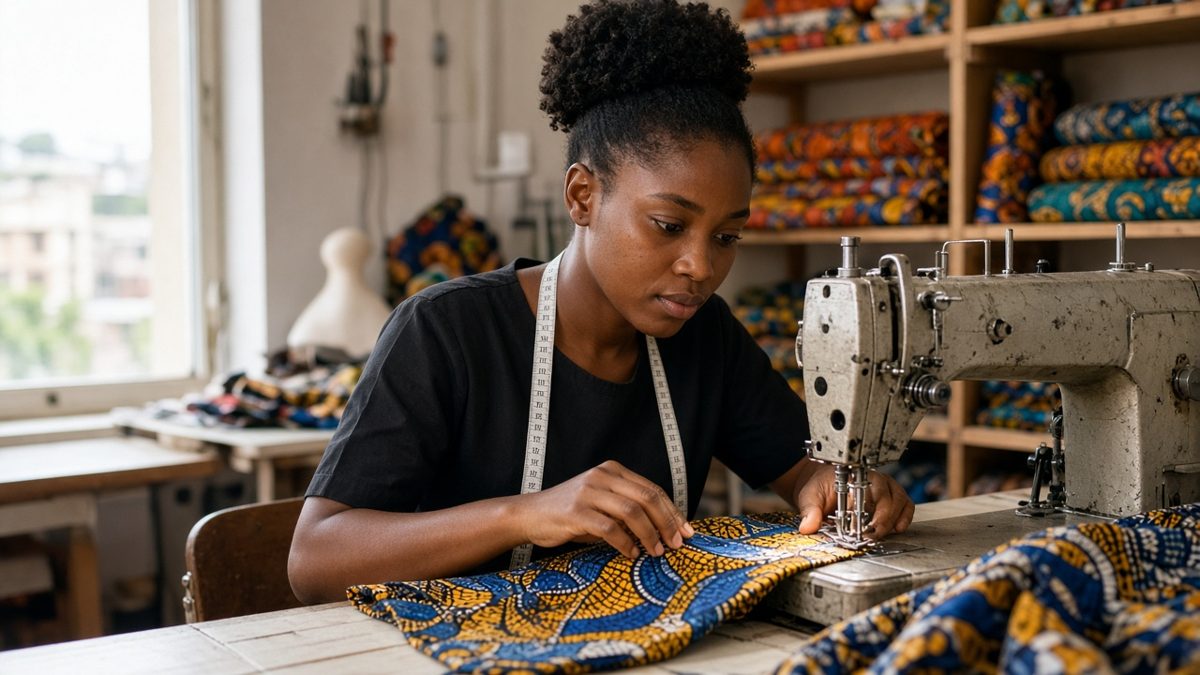
Tailoring is one of the most dependable skills in Nigeria. Aso-ebi season never really ends, school uniforms need sewing every term, and a tailor who delivers on the promised date is treasured. Before you sign up anywhere, though, it helps to know what you are committing to. How long does it take to learn tailoring in Nigeria, and what does it cost? The honest answer depends on the route you choose and the level you want to reach.
Quick answer: basic tailoring takes about three to six months, intermediate skills six to twelve months, and advanced work such as bridal and corsetry one to two years. Apprenticeships commonly cost ₦20,000 to ₦100,000, short courses ₦50,000 to ₦150,000, and premium Lagos academies several hundred thousand naira.
The short answer
| Level | What you can do | Typical time |
|---|---|---|
| Basic | Take measurements, sew simple garments, make adjustments | About 3 to 6 months |
| Intermediate | Draft patterns, sew most everyday styles to fit | About 6 to 12 months |
| Advanced | Corsetry, bridal, suits and complex designs | About 1 to 2 years |
Those ranges match what Nigerian training guides and fashion academies published in 2026, including a March 2026 cost guide on Ttrell. Structured academy programmes for complete beginners commonly run six to eight months full time.
Route 1: Apprenticeship with a working tailor
This is still the most common path. You attach yourself to an experienced tailor, pay a training fee and learn on real clients and real deadlines.
- Cost: published 2026 ranges sit around ₦20,000 to ₦100,000 in most cities, depending on the tailor and location. Ttrell quotes ₦20,000 to ₦80,000; a June 2026 guide on WithinNigeria quotes ₦30,000 to ₦100,000.
- Length: six months to two years, depending on your agreement and pace.
- Strengths: speed, commercial instinct, and knowing what Nigerian clients actually want.
- Weaknesses: quality varies, and some apprentices spend months on errands rather than sewing.
Agree in writing what you will learn and by when. A good master will teach measurement, cutting, sewing, finishing and how to deal with customers, not just how to sew buttons.
Route 2: Fashion school or academy
Structured programmes give you a curriculum, pattern drafting systems and a certificate. Prices range widely:
| Example | Programme | Published fee or length |
|---|---|---|
| Short courses at sewing academies | Basics and foundation | Often ₦50,000 to ₦150,000 (WithinNigeria, 2026) |
| Reign Fashion Academy, Asaba | Beginner to advanced | 6 months full time |
| Kodiateliers Fashion Academy, Ajah, Lagos | 8-month beginner to advanced | ₦800,000 |
| Kodiateliers Fashion Academy, Ajah, Lagos | 5-month intermediate to advanced | ₦600,000 |
Fees change, so confirm current prices directly with any school before you pay.
Route 3: The hybrid
Many successful tailors take a short structured course for the fundamentals, then work under an experienced tailor for a few months to build speed and learn the business. It often gives you the best of both: proper pattern knowledge and real-world pace.
What actually makes you learn faster
- Daily practice. Sewing is muscle memory. An hour a day beats a long session once a week.
- Your own machine. Practising at home doubles your learning time.
- Cheap fabric first. Make mistakes on inexpensive material, not a client’s lace.
- Measure everyone. Take measurements of family members and sew for them; real bodies teach fit.
- Keep a style book. Note every pattern, adjustment and mistake.
What the first three months usually look like
| Month | Typical focus | You should be able to |
|---|---|---|
| 1 | Machine control, straight and curved seams, taking measurements | Thread and control a machine confidently; measure a client accurately |
| 2 | Basic patterns: skirts, trousers, simple tops | Cut and sew a fitted skirt and trousers |
| 3 | Bodice drafting, darts, zips, facings | Sew a simple gown and handle common adjustments |
If you are three months in and still not sewing garments yourself, raise it with your trainer early.
The real cost beyond training fees
| Item | Why you need it |
|---|---|
| Sewing machine (manual, electric or industrial) | For practice and your first paid jobs |
| Measuring tape, tailor’s chalk, scissors, pins | Everyday basics |
| Pattern paper and ruler set | Drafting |
| Practice fabric | Learning without risk |
| Transport and feeding during training | Often the biggest hidden cost |
When can you start earning?
Many trainees earn from adjustments, hemming and simple styles within the first few months. Full outfits for paying clients usually come once you can consistently deliver a good fit. Start with friends and family, deliver on time, photograph every finished piece and ask for honest feedback.
Once you are ready, create a free Worker.ng profile as a tailor or fashion designer so customers in your city can find you. There is no commission and clients contact you directly. See how others present their work on tailors in Lagos, tailors in Abuja and fashion designers in Ibadan.
Customers often ask what tailoring costs; our guide on how much a tailor costs in Nigeria in 2026 helps you price competitively. And if you are still comparing trades, read the best handwork to learn as a lady and the top 10 high paying handwork jobs.
Questions to ask before you pay any tailor or school
| Question | A good answer sounds like |
|---|---|
| What will I be able to sew after three months? | A clear list: measurements, skirts, trousers, simple gowns |
| How many hours a day will I actually sew? | Most of the day, not errands |
| Will I learn pattern drafting? | Yes, with a named system |
| Can I see work by former trainees? | Photos or garments, happily shown |
| Is there a certificate, and is the fee refundable? | Written terms, no pressure |
My honest opinion: the cheapest apprenticeship can be the most expensive if you spend a year running errands. Pay for clear outcomes, not for a name.
Frequently asked questions
How long does it take to learn tailoring in Nigeria?
Basic sewing takes about three to six months, intermediate skills six to twelve months, and advanced work such as bridal and corsetry one to two years.
How much does it cost to learn tailoring in Nigeria?
Apprenticeships commonly cost ₦20,000 to ₦100,000, short courses about ₦50,000 to ₦150,000, and premium academy programmes several hundred thousand naira.
Can I learn tailoring in three months?
You can learn the basics, measurements and simple garments in three months with daily practice, but fitted styles take longer.
Enjoying our content? Add Worker.NG as a preferred source on Google.
Add us as a Preferred SourceHave a skill people need?
Create your Worker.NG profile and get discovered by people looking for your skill.
Be the first to comment