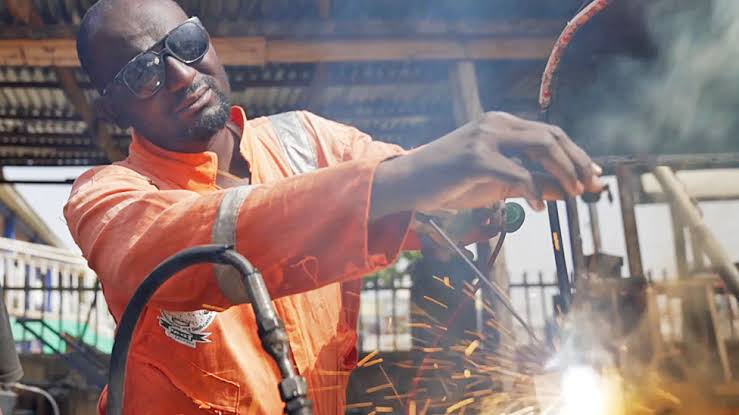
If you are a young person in Nigeria wondering how to make money, starting a welding business could be one of the best decisions you ever make.
You might have seen people with welding machines making products and wondered, “Can I do that too?” The answer is yes, you absolutely can do that too.
Starting a welding business gives you the chance to be your own boss and earn good income. In Nigeria, people pay well for good welding work because it solves real problems like broken gates, rusty grills, and metal structures that need fixing.
This guide has been written especially to explain the step-by-step process on how to start a welding business in Nigeria. You’ll also read information about the tools you need and how to find customers in Nigeria.
What Is Welding Business?
Welding is the process of joining two pieces of metal together by heating them until they melt and stick. In Nigeria, welding is useful in making metal gates, repairing vehicles, fixing broken tools, building metal roofs, and creating decorative designs.
A welding business can start small and grow over time into a big workshop employing many people. The important thing is to provide good quality and trustworthy service. Once people know you do good work, they will refer others to you.
Tools and Equipment You Need to Start
These are the tools and equipment you need to start a welding business in Nigeria:
1. Welding machine
2. Welding rod
3. Welding helmet
4. Welding gloves.
5. Welding aprons.
6. Adjustable pliers.
7. Angle grinders.
8. Safety goggles.
9. Metal files.
10. Hammers
11. Benches.
12. Measuring tools.
How to Start Welding Business in Nigeria
These are tips to start welding business in Nigeria:
1. Look for a Good Location
The location of your welding business matters if you want to be successful in this business. Some welders work from home if they have space in their compound.
Others can choose to rent a small shop or workspace near busy roads or markets. The best places to setup your business are where people see your work easily and where similar services are needed.
For example, many welders have found it useful to setup at markets, motor parks, construction sites, and busy towns because people usually need welding services there. You can also set up near other craftsmen like carpenters, electricians, and mechanics.
If renting a place is too expensive at first, you can work mobile by visiting clients at their homes or shops. Many customers prefer this because it saves them the stress of transporting metal items. Just ensure you carry your tools safely and organize your work schedule to fit in the homes of your customers.
2. Creating Your Startup Budget
Before you start your welding business, you should prepare a startup budget. This means writing down how much money you need to begin. A simple budget helps you avoid surprises and plan how to save or borrow money.
Money will be needed for tools and equipment, safety gear, rent, transportation, electricity or generator fuel, and even phone data to communicate with customers.
When planning, it is important that you don’t forget to include money for repairs and maintenance of your tools because welding machines wear out with use from time to time.
The most important thing is that you start with what you can afford and expand gradually. A clear budget gives you confidence and helps you make smart financial decisions for your business.
3. Register your Welding Business
In Nigeria, it is not compulsory for small businesses to register immediately but registering your business is good especially if you’re thinking long-term. When your business is registered, customers trust you more because your business looks more professional.
To register your business, you can visit the Corporate Affairs Commission (CAC) or use online services. You can choose to register as a Sole Proprietorship which is affordable for small businesses like yours. Then you will need your personal information, proposed business name, and small registration fee.
Once you have registered your welding business, you can then use the business name on invoices and receipts. When customers see a registered business, they feel more confident to pay for work and recommend you to others.
4. Set Up Your Price
One of the hardest parts for new welders is deciding how much to charge. So, have it at the back of your mind that if your price is too high, customers might choose someone else. If it is too low, you might not make enough to cover your costs.
To set prices, first calculate how much it costs you to do the work including factors like materials, electricity, transportation, and time. Then add a small profit on top of it. Well, if you are confused, you could visit other welding businesses in your area to see what they charge.
For example, if other welders charge ₦5,000 to fix a broken gate, you might start around that price but offer extra value like neat finishing.
Then, always explain your prices clearly to customers. You will come to see that when people understand why your price is like that and your work is quality, they will be happy to pay.
5. Market Your Businesses As Much As Possible
One thing about business is that you can be the best welder in town, but if no one knows you exist, your business will be slow. This is because marketing helps you reach customers and show them your services.
One easy way is using social media like Instagram, Facebook, and WhatsApp. Take clear photos of your work and post them online. You could even ask your friends and family to share your posts. When people see good work, they call you for jobs.
If you have small money with you, you can also design simple flyers and leave them at markets, carpentry workshops, and motor parks.
Frequently Asked Questions (FAQs)
1. How much money do I need to start a welding business in Nigeria?
You can start a small welding business with as little as ₦100,000–₦300,000 depending on the tools and location. Over time, you can expand and buy better equipment.
2. Do I need formal education to start welding?
No. Formal education helps, but what matters most is your welding skill, safety knowledge, and practice. Many welders start with vocational training and apprenticeships.
3. Where can I learn welding in Nigeria?
You can learn in technical schools, vocational centres, or by working as an apprentice under an experienced welder.
4. Is welding profitable in Nigeria?
Yes. Welding services are always needed for gates, grills, roofs, machinery repairs, and metal products. With good skill and marketing, you can earn consistent income.
5. How long does it take to learn welding?
Basic welding can take 3–6 months to learn well. Mastery and confidence grow with practice and experience.
6. Can I run my welding business from home?
Yes. Many welders start from home, especially if they have space and safety tools. Later they may move to their own workshop.
7. Do I need a generator or electricity?
Yes. Welding machines need stable power. If electricity is unstable, using a generator or inverter helps you work without interruptions.
8. How do I get customers for my welding business?
You can use social media, flyers, word-of-mouth referrals, and good service delivery. Being friendly and reliable attracts repeat customers.
9. What safety tools do I need?
You need a welding helmet, gloves, goggles, apron, and protective shoes. These protect you from sparks, heat, and flying metal bits.
10. Can I expand my welding business into other services?
Yes. You can offer cutting services, metal design, vehicle repairs, and construction site welding. With experience, the possibilities grow.
Conclusion
Welding business may not be easy at first but with the right knowledge you can thrive. Yes, your future i
s in your hands, and having a welding business can be one of the strongest paths to financial independence in Nigeria.
You may also like
Have a skill people need?
Create your Worker.NG profile and get discovered by people looking for your skill.