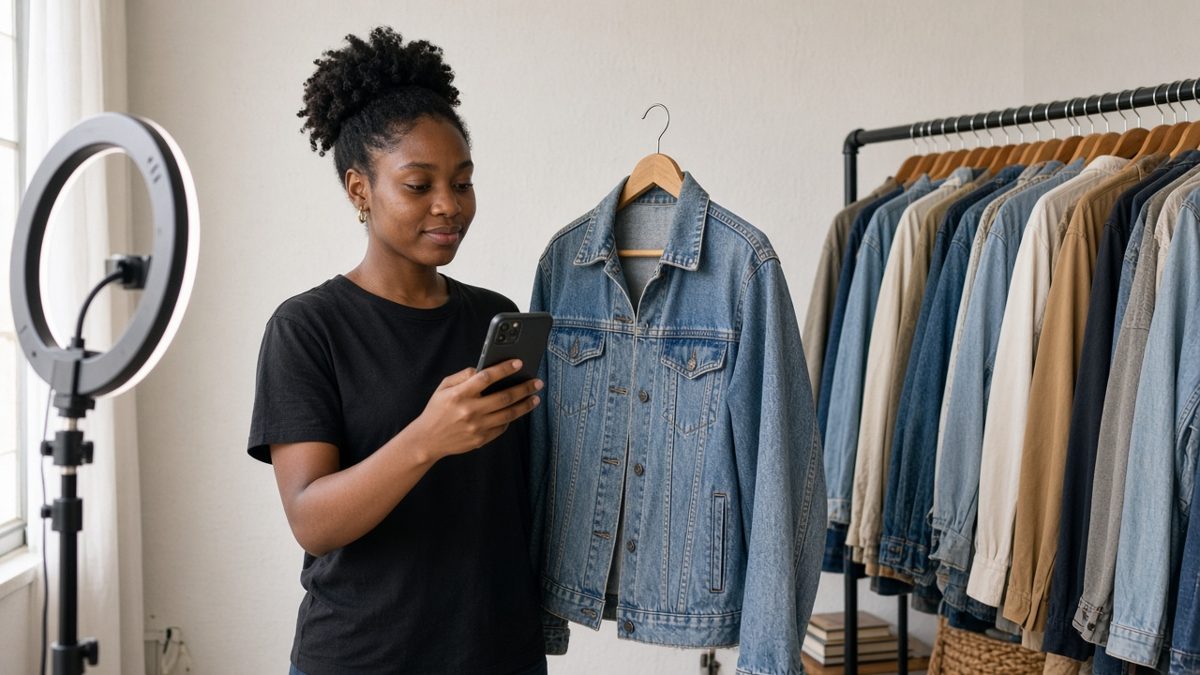
Thrift, or okrika as most of us grew up calling it, has gone from bend-down-select to a stylish online business. Young Nigerians proudly buy vintage denim, quality jackets and designer pieces at a fraction of the new price, and sellers with a good eye are building loyal followings on WhatsApp and Instagram. If you are wondering how to start a thrift business in Nigeria, this guide covers the legal reality, how much stock to begin with, how to prepare clothes so they sell at a premium, and how to price for profit.
Quick answer: buy from established local wholesalers rather than importing, start by handpicking 20 to 30 Grade A pieces (about ₦30,000 to ₦50,000 based on 2026 seller quotes), wash, repair and photograph them properly, and price each item at two to three times its true cost. Sell through WhatsApp status, Instagram and TikTok, with clear measurements on every piece.
First, understand the legal reality
Second-hand clothing appears on the Nigeria Customs Service list of absolutely prohibited imports, a point repeated in the US Commercial Service summary of Nigeria’s import prohibitions. Yet okrika is sold openly in markets across the country. The sensible approach for a small seller is simple:
- Do not import bales yourself.
- Never pay a stranger online to “clear” a container for you.
- Buy from wholesalers and retailers already trading in local markets, and keep your receipts.
Handpick or buy a bale?
| Route | What you get | Indicative budget (2026 seller and guide quotes) | Risk |
|---|---|---|---|
| Handpicking | 20 to 30 pieces you inspect yourself | About ₦30,000 to ₦50,000, plus transport and laundry | Low: you see every item |
| Grade B bale | Mixed condition, unsorted | Quoted around ₦80,000 to ₦180,000 | Medium: you cannot see everything inside |
| Grade A bale | Cleaner, more branded pieces | Quoted from about ₦200,000 | Higher capital, better stock |
| Extras | Detergent, hangers, nylon, data, ring light | Roughly ₦10,000 to ₦25,000 | Often forgotten |
These ranges come from 2026 guides by CampusHustle and NaijaSabi, not an official price list, so confirm at the market before you budget. If money is tight, handpick first, sell, then reinvest. A sealed bale is a gamble, and the person selling it knows more about what is inside than you do.
Understand the grades
- Grade A (first grade): almost new, no stains or tears, sometimes with tags. Ideal for an online shop.
- Grade B: good condition with slight wear or a small repair needed. Good for walk-in buyers and lower price points.
- Grade C or rejects: cheap, often stained or worn, and hard to sell online.
Sellers use these labels loosely, so judge the items in front of you, not the name on the bale.
Where to buy in Lagos
Lagos sellers commonly mention Katangua in Abule Egba for volume and wholesale stock, Yaba for branded hoodies, vintage denim and streetwear, Balogun for women’s dresses and men’s jeans, and Tejuosho for a more organised setting with shoes and women’s fashion. Go with a friend, carry limited cash and inspect before you pay.
Preparation is where your profit is made
A crumpled shirt sells at market price. A washed, ironed and well-photographed one sells for far more.
- Sort every piece into ready, needs repair and reject.
- Wash and iron everything before it goes online.
- Repair missing buttons, loose seams and small tears. A five-minute fix can turn a reject into a sale.
- Photograph in daylight against a plain wall, on a hanger or a model, front and back, plus close-ups of labels and fabric.
- Measure chest, waist and length. Second-hand size labels often do not match the real fit.
If repairs or resizing are beyond you, partner with a local tailor who can alter pieces in bulk, and a launderer or dry cleaner for delicate items. Both are easy to find by city on Worker.ng, for example tailors in Lagos.
How to price thrift clothes
Price each piece from its true cost, not from what you paid alone:
True cost = item price + share of transport + laundry and repairs + data and packaging
| Example line (illustrative) | ₦ |
|---|---|
| Jacket bought at market | 3,500 |
| Share of transport | 500 |
| Washing, ironing, small repair | 700 |
| Data, nylon and packaging | 300 |
| True cost | 5,000 |
| Selling price at 2 to 3 times true cost | 10,000 to 15,000 |
Good Grade A stock commonly sells at two to four times its true cost when presented well. Rejects should be sold cheaply in bundles to clear space and recover cash.
Selling channels that work
- WhatsApp status and groups: still the highest-converting channel for trust-based local selling.
- Instagram: builds a recognisable brand over time. Post drops at the same time each week.
- TikTok: try-on videos and “what I bought at the market” content travel far.
- Pop-up stalls: campus fairs, church bazaars and weekend markets.
Delivery and payment
Decide your delivery plan before your first order. Use reliable dispatch riders for local buyers and a known courier for other states, and take full payment upfront for out-of-state orders. Keep a simple record of what sold, to whom and when it was paid. A clear returns rule, such as exchanges for genuine size problems but no returns for a change of mind, protects your margins.
Mistakes I see new thrift sellers make
- Buying a sealed bale first. Learn what sells by handpicking before you gamble on a bale.
- Posting unwashed clothes. Musty, creased photos tell buyers to haggle.
- No measurements. “Size M” means little in thrift. Give chest and length in inches.
- Pricing from the market price only. Add transport, laundry, repairs and data, or you will sell out and still be broke.
My honest opinion: thrift is a curation business. Customers follow a seller whose taste they trust, so be consistent about the style you buy.
Frequently asked questions
How much do I need to start a thrift business in Nigeria?
Handpicking 20 to 30 good pieces can start from about ₦30,000 to ₦50,000 plus transport and laundry, based on 2026 seller quotes. Bales cost considerably more.
Is thrift business profitable in Nigeria?
It can be, when you buy carefully, prepare items well and price from your true cost. Presentation is what separates profitable sellers from struggling ones.
Where can I buy thrift clothes in Lagos?
Sellers commonly buy at Katangua in Abule Egba, Yaba, Balogun and Tejuosho markets. Always inspect items before paying.
Enjoying our content? Add Worker.NG as a preferred source on Google.
Add us as a Preferred SourceHave a skill people need?
Create your Worker.NG profile and get discovered by people looking for your skill.
Be the first to comment