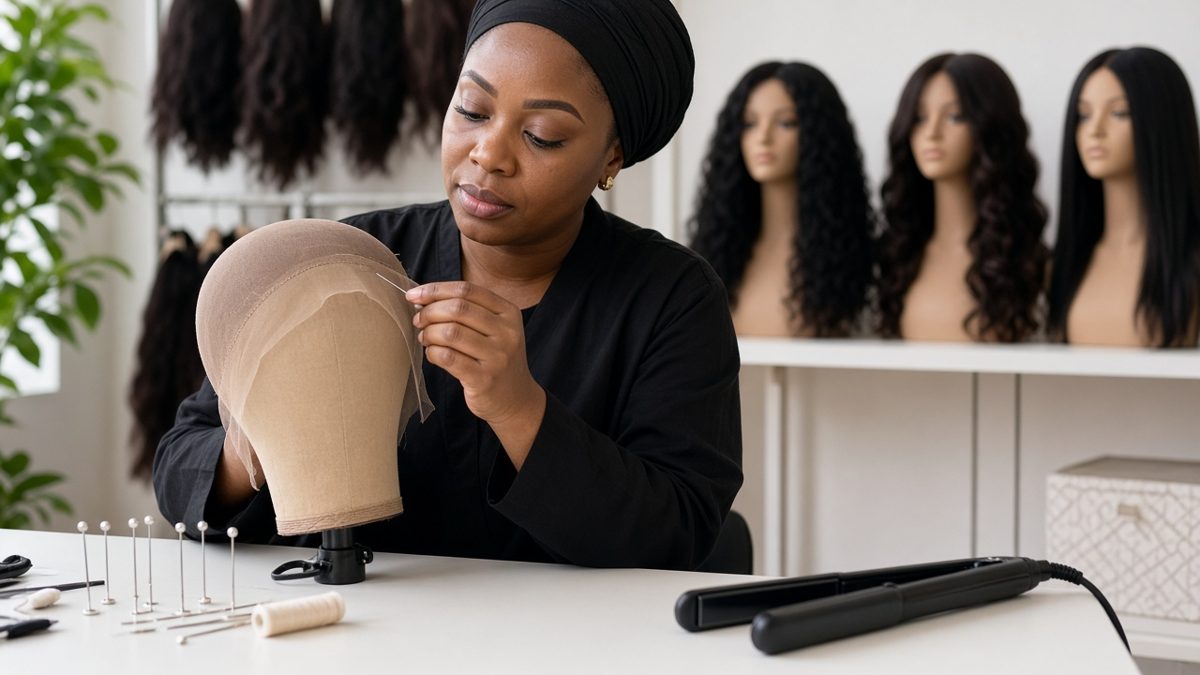
Walk into any office in Lagos or Abuja on a Monday and you will see the quiet power of a good wig. Custom units, frontals and closures have become a major part of how Nigerian women style their hair, and the people who make, revamp and sell them can build very serious businesses. If you are researching how to start a wig business in Nigeria, the first thing to decide is which kind of wig business you want, because the capital and the skills are completely different.
Quick answer: decide first whether you will make wigs as a service, make and sell units, or resell hair, because the capital is completely different. Most beginners do best starting as a service-only wig maker with tools and solid training, then adding hair stock once paying clients show what sells.
Three different wig businesses
| Model | What you do | Capital needed | Main risk |
|---|---|---|---|
| Wig maker (service) | Make units from hair the client brings, plus installs and revamps | Low: tools and training | Your reputation rests on fit and finish |
| Wig maker and seller | Buy hair, make ready-made and custom units, sell them | Medium to high: hair stock | Tied-up stock and exchange-rate swings |
| Hair vendor | Buy and resell bundles, closures, frontals and ready wigs | High: first hair order | Bad batches and supplier fraud |
For most beginners, the smartest route is to start as a wig maker offering a service, then add stock once you have paying clients and know exactly what they buy.
Learn the craft properly
There is no national licence for wig making in Nigeria. Skills come from academies, salon apprenticeships, paid short courses and practice. When comparing courses, look beyond the price and ask:
- Will I practise on real hair and lace, not just watch demonstrations?
- Does it cover measuring a head, cap fitting, sewing closures and frontals, plucking, bleaching knots and customising the hairline?
- Are installs and revamps included? They bring repeat income.
- Is pricing and client management taught?
- Can I see wigs made by past students?
Make two or three practice units on your own head or a family member’s before you charge anyone.
Tools you need
| Start with | Add later |
|---|---|
| Canvas block heads in common sizes, clamp or stand | Sewing machine for faster machine-made units |
| T-pins, curved and straight needles, weaving thread | Ventilating needles for lace repairs |
| Wig caps, elastic bands, adjustable straps, combs | Steamer for setting styles |
| Measuring tape and a client measurement book | Bleach, toner and dye supplies for colouring |
| Sharp scissors and a razor comb | Ring light and a good phone for content |
| Flat iron, curling tools, blow-dryer and heat protectant | Display mannequins for a studio |
Buying hair without getting burnt
Hair is the biggest cost in almost every unit. Supplier labels such as virgin, Remy, raw, single donor, double drawn, bone straight or 12A are not regulated standards in Nigeria, so treat them as marketing and judge the hair itself:
- Buy a sample bundle from at least two suppliers before any bulk order.
- Wash and condition the sample. Shedding, tangling, a chemical smell or colour that runs are warning signs.
- Do a burn test on a strand: human hair smells like burnt hair and turns to ash; synthetic fibre melts.
- Compare thickness at the weft and the tips to check how full the ends really are.
- Keep a few strands from each batch to compare with later deliveries.
Start with a local wholesaler whose hair you have handled. Direct importing brings shipping, clearing and currency risk, so leave it until your volume justifies it.
How to price a wig
Here is an illustrative example, adapted from a 2026 costing published by Pryme, to show the method. The figures are assumptions, not market prices.
| Line | Example |
|---|---|
| 3 human hair bundles at ₦45,000 | ₦135,000 |
| Lace closure | ₦35,000 |
| Cap, net, thread, glue and sundries | ₦3,000 |
| Labour: 4 hours at ₦3,000 | ₦12,000 |
| Share of rent, power and tools | ₦3,000 |
| Total cost | ₦188,000 |
| Price for a 25% margin, rounded | ₦250,000 |
Notice that labour is a small share of the total. That is exactly why you need a separate service price list for clients who bring their own hair: making a unit, installation, revamping and colouring should each have a clear price.
Always take a deposit before buying hair for a client, and state in writing what happens if they cancel after the hair is bought.
Finding and keeping clients
- Show transformations. Before-and-after videos of installs and revamps convert better than any flyer.
- Offer maintenance. Book a revamp date when you deliver the unit. Repeat clients are the backbone of this trade.
- Partner nearby. Makeup artists and hair stylists are asked about wigs constantly; agree a referral arrangement.
- Be easy to find. Create your free Worker.ng profile as a hair stylist and mention wig making and revamps in your services. Customers in your city can reach you directly, and there is no commission. See how others present their work on hair stylists in Lagos and hair stylists in Abuja.
For more on building a steady client list, read how hair stylists and nail technicians get regular clients and our guide to becoming a hair stylist in Nigeria.
Register when you are ready to grow
Register a business name with the CAC once you start selling stock or working with boutiques and salons. If you open a studio, check local council permits for signage and premises.
Mistakes that cost new wig makers money
- Buying stock before knowing your clients. Ten units in lengths nobody asks for is money frozen on a shelf.
- Trusting labels instead of testing hair. Wash and burn-test every new supplier’s sample.
- Not pricing revamps properly. Revamps are repeat income; give them a clear price and a booking reminder.
- Skipping measurements. A unit that does not fit is a unit the client will not wear, or recommend.
My honest view: wig making is a trust business. Clients hand you hair worth a lot of money. Clear receipts, honest timelines and careful handling are as important as a natural hairline.
Frequently asked questions
How much do I need to start a wig business in Nigeria?
A service-only wig maker can start with tools and training. Selling stock requires much more, because hair is expensive and paid for upfront. Start with service income, then reinvest in stock.
How long does it take to learn wig making?
Basic units can be learned in weeks with intensive practice. A clean, natural hairline and confident custom fitting usually take a few months.
Is the wig business profitable in Nigeria?
It can be, particularly when you combine unit sales with installs and revamps, price your labour and take deposits before buying hair.
Enjoying our content? Add Worker.NG as a preferred source on Google.
Add us as a Preferred SourceHave a skill people need?
Create your Worker.NG profile and get discovered by people looking for your skill.
Be the first to comment