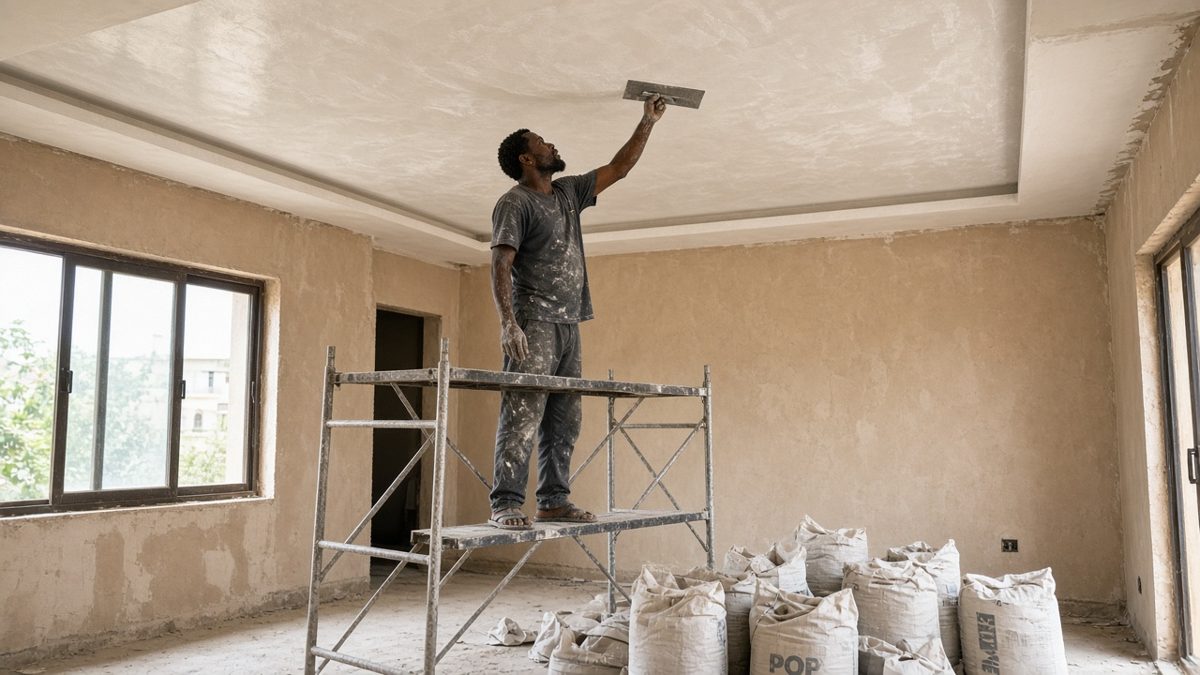
The POP cement brands Nigerian installers mention most often are BUA POP (made in Port Harcourt), ABS, AZ Moulda, and imported gypsum plasters such as Elephant, with Magic Star and Morado common in eastern markets. In late 2026 a 40kg bag of BUA POP sells for roughly ₦10,000–₦13,000 and imported brands for ₦13,000–₦16,000. The best bag is the one that mixes smooth, gives you working time, sets hard without sand in it, and comes from a dealer who isn’t selling refills.
Ask five POP installers which cement is best and you’ll get five answers, usually with a story attached. This roundup collects what installers, dealers and homeowners have actually said in public, and adds current prices and the checks that separate a good bag from a bad one.
POP cement prices in Nigeria (November 2026)
| Brand / type | Bag size | Typical price range | Where you’ll see it most |
|---|---|---|---|
| BUA POP (gypsum plaster, Port Harcourt) | 40kg | ₦10,000–₦13,000 | Nationwide through BUA distributors |
| Imported gypsum plasters (Elephant and similar) | 40kg | ₦13,000–₦16,000 | Lagos, Abuja, Port Harcourt building materials markets |
| ABS POP cement | 40kg | Mid-range; was about ₦8,800 in March 2024 and has risen since | South-west, South-east |
| AZ Moulda | 40kg | Mid-range; was ₦8,500–₦12,000 in March 2024 depending on city | South-south, Benin City, Lagos |
| Magic Star, Morado and other eastern brands | 40kg | Varies by dealer | Onitsha, Awka and other Anambra markets |
| General retail POP | 25kg | ₦8,000–₦12,000 | Small retailers |
The 2026 figures are market ranges published by Nigerian building material guides in October 2026; the 2024 figures come from a Nairaland cement price thread where a Benin City dealer said AZ was still selling for as much as ₦12,000 there while Lagos lists showed ₦8,500. That gap between cities hasn’t gone away. Buying 100 bags or more from a distributor usually takes 10–20% off retail.
The brands, from the installer’s side
1. BUA POP
BUA runs what it describes as Nigeria’s first indigenous gypsum plaster plant, in Port Harcourt, with distributors in every state. Nigerian building writers who work with installers note that local POP like BUA has “improved significantly” and that many contractors now use it for standard residential jobs.
- Installers like: availability, a steadier price than imports (no exchange-rate swings), consistent white colour.
- Watch for: storage. Like every gypsum plaster, it spoils if the bag sits in a damp shop.
2. Imported gypsum plasters (Elephant and others)
Imported plasters have a long reputation for smooth finish and consistency, which is why many installers still reach for them on high-end decorative ceilings.
- Installers like: fine texture for cornices and mouldings, predictable setting time.
- Watch for: price jumps with the naira, and old stock that has absorbed moisture in transit.
3. ABS
ABS appears on almost every dealer list. A POP materials seller in Anambra listed it first on Nairaland among stocked items, alongside white moulding plaster, Magic Star, Morado and AZ.
- Installers like: it’s familiar; most crews know exactly how much water it takes.
- Watch for: refilled bags carrying the name. Check the stitching.
4. AZ Moulda
AZ is a common name in Edo and the South-south. In the Nairaland price thread, a dealer complained that sellers in Benin City were still charging far above the prices quoted for Lagos, which tells you AZ demand there is strong enough to hold price.
- Installers like: good moulding behaviour.
- Watch for: big price differences between dealers in the same city. Get two quotes.
5. Eastern market brands (Magic Star, Morado)
These turn up mostly in Onitsha and Awka. They can be good value for flat screeding work, but quality reports are more mixed, so test a bag before committing to a full job.
POP vs polystyrene: what people on the forums say
A homeowner on the Nairaland building construction thread asked whether to choose polystyrene ceilings instead of regular POP. The reply that got agreement was simple: from experience, POP is still the best, but give it to a professional installer, not a “quack”. That matches what most installers say. The material is rarely the problem; poor mixing, thin coats and bad hanging are.
Another homeowner on the same thread asked whether to pay the installer for materials and labour together, or buy the materials personally and pay labour separately. If you buy the cement yourself, you control the brand; if you let the installer buy, agree the brand and number of bags in writing.
How to spot fake or bad POP cement
- Feel the powder. It should be fine, dry and free from lumps or grit. Installers say you shouldn’t feel sand when screeding.
- Check the bag. Factory stitching, clear printing and manufacturing details. Re-stitched or hand-tied bags are often refills.
- Do a quick mix test. A good bag gives a smooth, creamy paste that doesn’t set before you can work it, then dries solid and white.
- Look for NIS marking on local products, and ask the dealer where and when the batch came in.
- Be suspicious of a price far below the market. It’s usually old, damp or diluted stock.
- Buy the whole job from one batch so colour and setting stay consistent.
How many bags for your ceiling?
| Job | Rough guide |
|---|---|
| Flat ceiling, room of about 12 m² | 8–12 bags, depending on design and thickness |
| Standard 3-bedroom flat with simple drop designs | 80–150 bags |
| Heavy decorative ceilings with cornices and lighting troughs | Much more; ask your installer for a room-by-room count |
These are planning figures; your installer’s count for your exact design should win.
Lola’s note: when a POP ceiling cracks a year later, the bag usually gets the blame, but nine times out of ten it’s thin application, poor fibre or a wet roof. Spend as much time choosing the installer as the cement. Ask to see a ceiling they did at least two years ago, not last month.
What do POP installers in your area use?
If you fix POP in Lagos, Abuja, Port Harcourt, Benin, Onitsha or anywhere else, tell us in the comments: which brand do you trust this season, what are you paying per bag, and which one has disappointed you? We’ll update this page with what installers report.
Related reading and next steps
- Find a vetted POP installer or painter to finish the job; see also the paint brands Nigerian painters prefer.
- Roofing first: a leaking roof ruins any ceiling. Read which roofing sheets roofers recommend.
- Before paying any artisan, read how to pay an artisan safely.
- POP installer? Create your free Worker.ng profile and get found by homeowners near you.
Frequently asked questions
Which POP cement is best in Nigeria?
Installers commonly trust BUA POP for local availability and steady quality, and imported gypsum plasters for premium decorative work. ABS and AZ are popular mid-range choices. Test a bag and buy from a trusted dealer.
How much is a bag of POP cement in Nigeria now?
Roughly ₦10,000–₦13,000 for a 40kg bag of BUA POP and ₦13,000–₦16,000 for imported brands in late 2026, with differences between cities.
Is BUA POP good?
It’s widely used for residential jobs and praised for availability and whiteness. Store it dry and buy from authorised distributors.
Why does my POP ceiling crack?
Usually thin application, too little fibre, roof leaks or building movement, more often than the brand of cement.
Enjoying our content? Add Worker.NG as a preferred source on Google.
Add us as a Preferred SourceHave a skill people need?
Create your Worker.NG profile and get discovered by people looking for your skill.
Be the first to comment