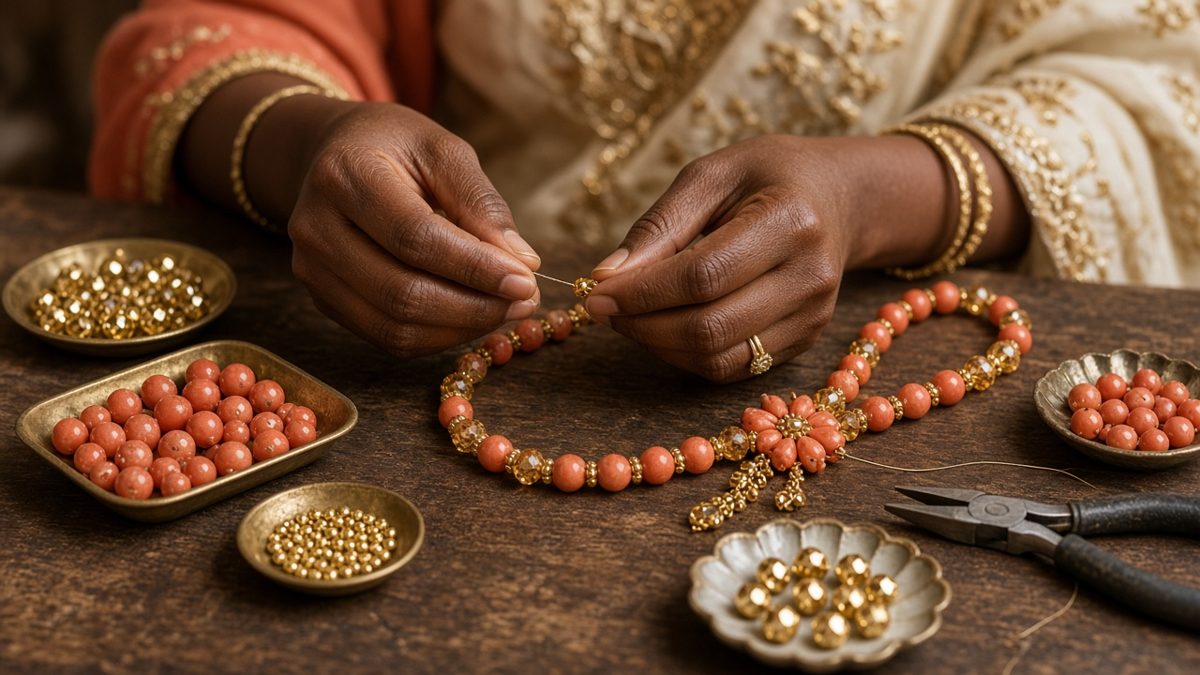
Bead making is one of those crafts that looks gentle and turns out to be serious business. Every Nigerian wedding season, brides need coral sets, aso-ebi groups need matching necklaces and earrings, and someone has to make them, usually against a deadline. If you have patient hands and an eye for colour, learning how to start a bead making business in Nigeria can give you a trade you run from home first and grow into a brand.
Quick answer: learn the basics through an apprenticeship or a short course, practise on inexpensive beads, then build around bridal and aso-ebi sets where the money is. Start from home with a small kit of beads, wire, findings and good pliers, and only buy premium coral and crystals after a client has paid a deposit.
Here is how to do it properly, from learning the skill to pricing your first bridal set.
What a bead business actually sells
Before you buy a single strand of beads, decide what you will be known for. Most successful bead makers in Nigeria build around one or two of these:
- Bridal and traditional sets. Coral and crystal necklaces, bracelets, earrings, crowns and fans for engagements and traditional weddings. These carry the highest prices and the tightest deadlines.
- Aso-ebi and party orders. Matching sets for family and friends of the celebrant, often ten to fifty pieces at once.
- Everyday jewellery. Bracelets, waist beads, anklets and earrings for regular wear and gifting.
- Bead bags, shoes and décor. Slower to make, but they stand out and photograph beautifully.
Starting with one lane lets you buy fewer materials and build a portfolio that looks deliberate rather than random.
Learn the craft
You can learn bead making through an apprenticeship with an established bead artist, a paid short course, or structured free material. The federal government’s Nigerian Youth Academy, for example, lists a Bead Making 101 course on its learning platform. Online lessons are fine for basics, but an experienced bead maker will teach you what videos skip: how to keep tension even, how to finish a piece so it does not snap at a party, and how to read what a bride really wants.
Practise with inexpensive beads until your work is consistent. Premium crystals and good coral are expensive mistakes to learn on.
Materials and tools
| Item | Use | Buying tip |
|---|---|---|
| Beads (crystal, glass, coral, pearl, seed beads) | The body of every piece | Buy by colour family so you can match sets; check consistency of size within a pack |
| Wire and beading thread | Structure and stringing | Use stronger wire for heavy bridal pieces |
| Clasps, crimps, jump rings, earring hooks | Findings that hold a piece together | Cheap findings are where pieces fail; buy better ones |
| Pliers (round nose, flat nose, cutters) | Bending, closing and trimming | One good set lasts years |
| Bead trays and organisers | Sorting and storage | Saves hours and stops costly mix-ups |
| Packaging | Boxes, pouches, branded cards | Bridal clients judge you by the box too |
Lagos and other big cities have wholesale bead markets, and many sellers now ship nationwide through WhatsApp and Instagram. Prices move with the exchange rate because many beads are imported, so compare at least two suppliers before a big order.
How much capital do you need?
Bead making is one of the lighter crafts to start. Some guides argue you can begin with a very small budget, and for practice pieces and simple bracelets that is true. A bridal line is different: one coral set can tie up a meaningful amount of stock. The smart approach is to keep a small starter kit for practice, then buy materials for big pieces only after the client has paid a deposit.
How to price a bead set
Many bead makers undercharge because they price only the beads. Use this simple formula instead:
Price = materials + (hours × your hourly rate) + overheads + margin
Overheads include packaging, transport to the market, data for marketing and a share of tools. Your hourly rate should reflect your skill; a detailed bridal crown that takes two full days should never be priced like a bracelet that takes an hour.
Here is how a worked quote might look. These are illustrative figures to show the method, not market prices:
| Line | Example |
|---|---|
| Materials for necklace, bracelet and earrings | ₦18,000 |
| Labour: 8 hours at ₦2,500 | ₦20,000 |
| Packaging and transport | ₦3,000 |
| Margin (20%) | ₦8,200 |
| Quoted price | about ₦49,200 |
Write the breakdown down for yourself even if you only show the client the final figure. It protects you when bead prices rise between quotes.
Taking orders without losing money
- Take a deposit before you buy materials. Fifty to seventy per cent is common for custom work.
- Confirm details in writing: colours, lengths, number of pieces and the delivery date.
- Build in time. Bridal orders often change. Agree a cut-off date after which changes cost extra.
- Photograph every finished piece in daylight before it leaves your hands. Those photos are your portfolio.
For tips on safe payment and clear invoices, our guide on billing formats for celebrity and event work applies just as well to bead orders.
Finding customers
Bead work sells on looks, so visual platforms matter. Post short videos of pieces being made, not just finished photos. Partner with makeup artists, fashion designers and event planners, who are often asked by brides to recommend a bead maker. A small referral thank-you keeps those relationships warm.
It also helps to be findable when someone searches. List your bead work free on Worker.ng under bead makers, with your best photos and the areas you deliver to. There is no commission, and customers contact you directly.
Growing beyond your living room
Once orders are steady, consider registering a business name with the CAC so boutiques and corporate gifting clients can work with you formally. Train an assistant to handle stringing so you can focus on design and client meetings. Many bead makers also add classes, teaching small groups at weekends, which brings income outside wedding season.
If you are still deciding which skill suits you, read our guides to the best handwork to learn in Nigeria as a lady and daily income handwork in Nigeria.
A checklist before you accept a bridal order
| Ask the bride | Why it matters |
|---|---|
| Date of each ceremony and delivery date | Bridal orders always run late; build in a buffer |
| Colour of the outfit, with a fabric sample or photo | Coral and gold read very differently against different fabrics |
| Number of pieces for the bride and her party | Aso-ebi add-ons change your stock order |
| Neck and wrist measurements | Avoids last-minute resizing |
| Budget range | Lets you suggest crystals or coral that fit it honestly |
| Deposit and cancellation terms, agreed in writing | Protects you if plans change |
My honest opinion: the bead makers who thrive are not always the most artistic. They are the ones who answer messages quickly, deliver two days early and package each set as if it were a gift. That is what brides tell their friends about.
Frequently asked questions
Is bead making a lucrative business in Nigeria?
It can be, especially if you focus on bridal and aso-ebi orders, price your time properly and take deposits. Everyday bracelets alone rarely pay well unless you sell in volume.
How long does it take to learn bead making?
Basic bracelets and earrings can be learned in weeks. Neat, durable bridal sets usually take several months of practice under someone experienced.
Can I start a bead business from home?
Yes. Most bead makers start at home with a small kit and a good table and lamp. A shop becomes useful only when walk-in customers and fittings justify the rent.
Enjoying our content? Add Worker.NG as a preferred source on Google.
Add us as a Preferred SourceHave a skill people need?
Create your Worker.NG profile and get discovered by people looking for your skill.
Be the first to comment